
Most people think of plants as the finishing touch in architecture, a nice fern in the lobby or a row of trees along the sidewalk. But some architects see plants as more than decoration. For them, greenery is not an accessory. It is a building material, a partner in design, and sometimes even the star of the show. These visionaries are reshaping skylines and proving that the future of cities might just look a little bit like a forest.
One of the most famous names in this field is Stefano Boeri, the Italian architect behind Milan’s Bosco Verticale, or Vertical Forest. These two towers are covered in more than nine hundred trees and thousands of shrubs, turning the buildings into living ecosystems. Residents say that their balconies feel like private gardens suspended in the sky. Boeri once explained his philosophy by saying, “We should not just plant trees in cities, we should build cities inside forests.” His words capture a new way of thinking about design that blurs the line between nature and architecture.
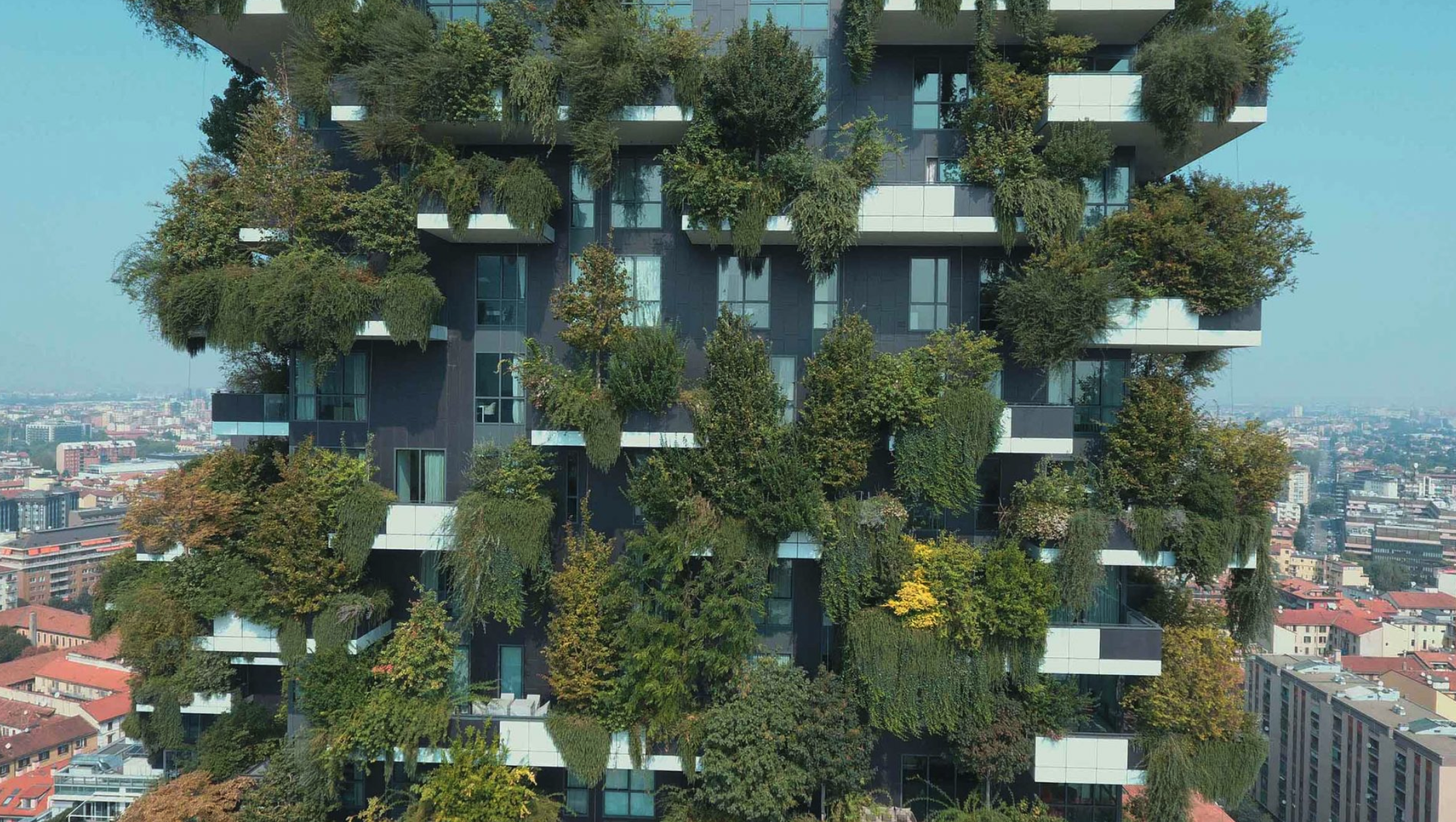
Bosco Verticale designed by Stefano Boeri
Patrick Blanc is another pioneer, often called the father of vertical gardens. Since the 1980s he has been creating massive plant walls that transform blank buildings into vibrant green canvases. His projects can be found in cities from Paris to Singapore, where entire hotels and museums are wrapped in lush greenery. Fun fact: Blanc himself is instantly recognizable by his signature green dyed hair, which he says reflects his lifelong devotion to plants.
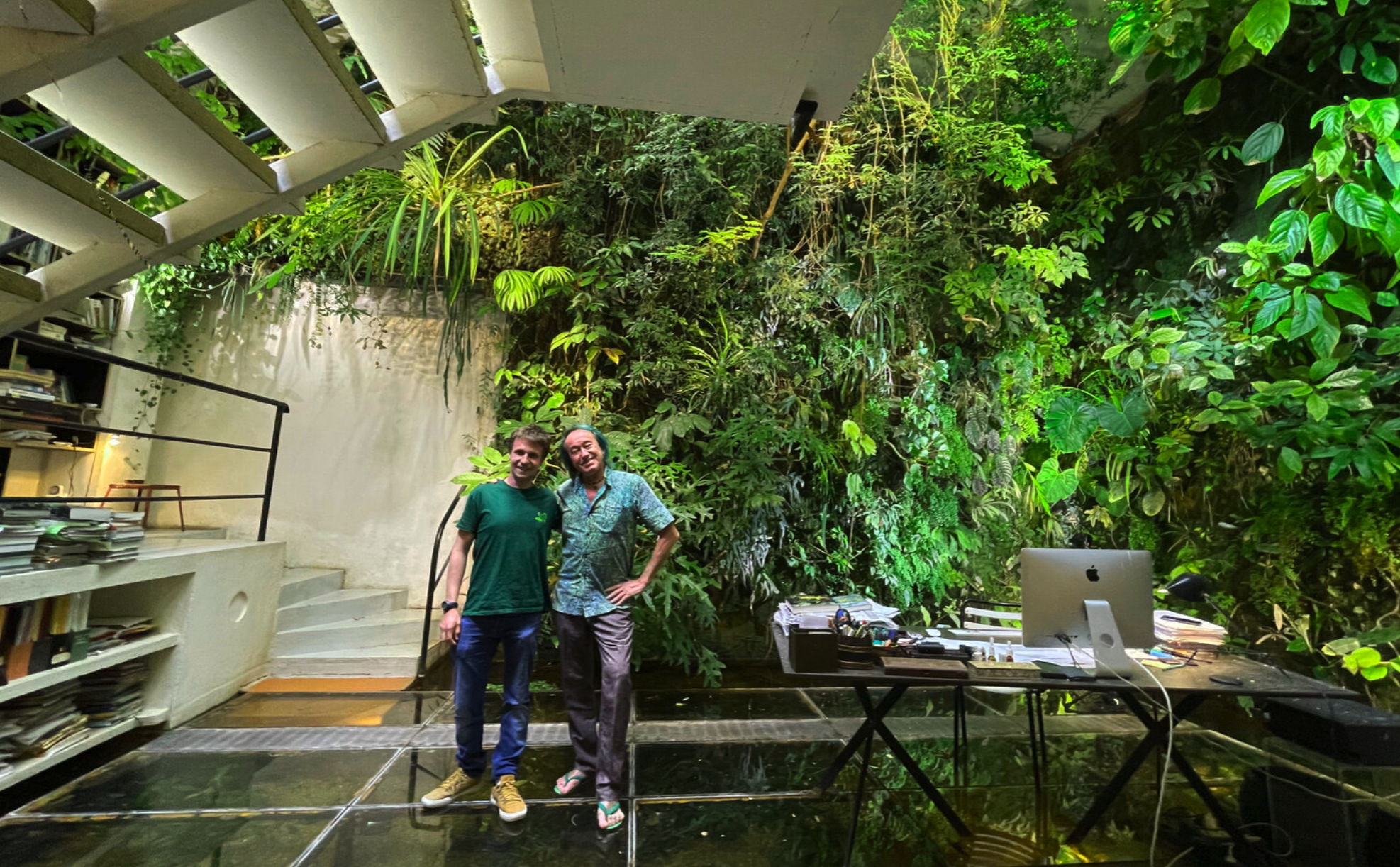
Patrick Blanc and Eliott Guegan Guillaume on the Christarium, July 2021
In Singapore, architects have taken plant centered design to a whole new level. The Marina Bay Sands complex features soaring structures paired with indoor gardens, while the Gardens by the Bay attraction includes giant Supertrees that glow at night and support real plants on their trunks. These man made trees act like vertical gardens while also harvesting solar energy. Visitors often describe walking through them as stepping into a futuristic fairytale.
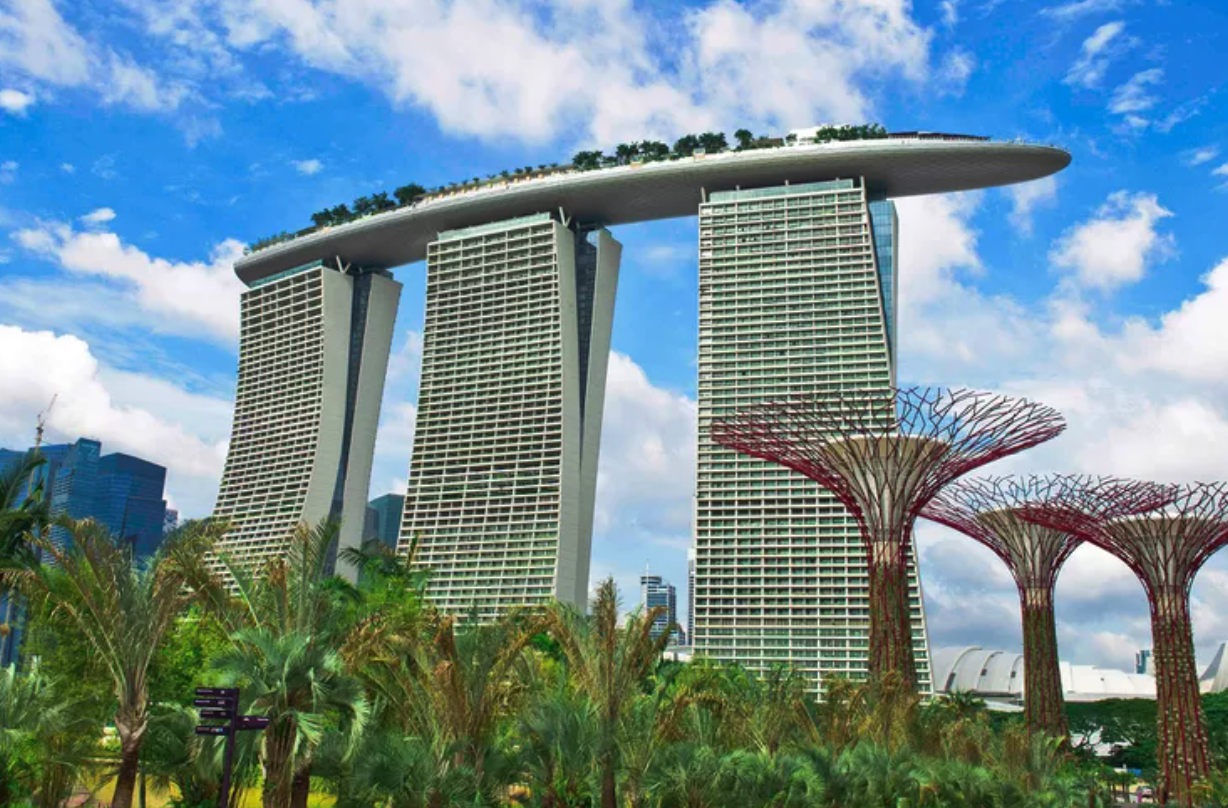
The exterior of Marina Bay Sands from Gardens by the Bay.
Closer to home, American architect Jeanne Gang designed Aqua Tower in Chicago with balconies shaped like rippling waves. The design was inspired by natural forms, and her firm has continued to integrate plant life into projects that emphasize sustainability. Her buildings feel alive, in part because they invite nature into their very structure.
“Architecture should connect people to the environment, not separate them from it.”
- jeanne gang
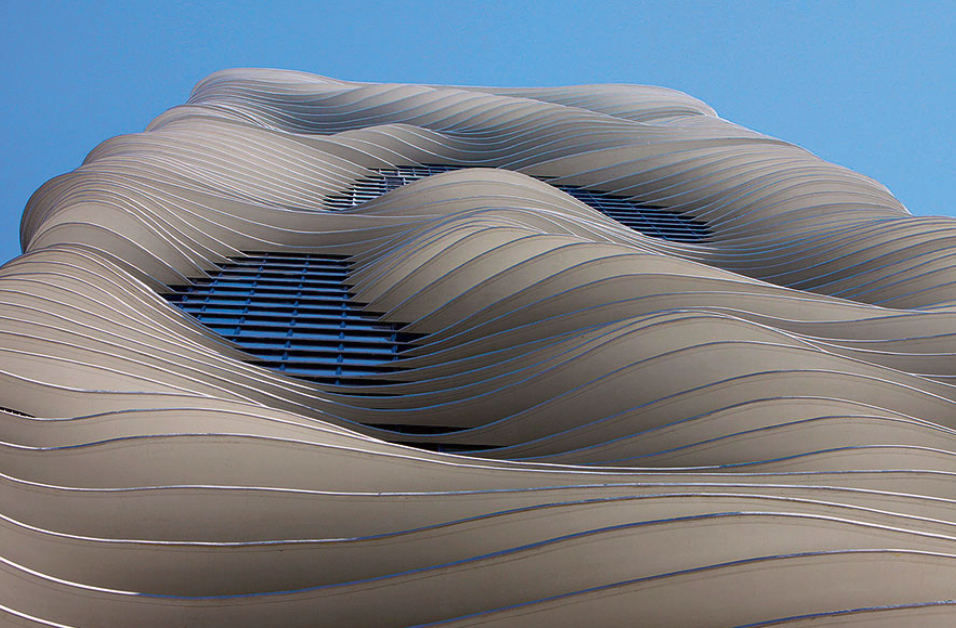
Aqua Tower photographed by Michael Tercha with Chicago Tribune
Traditional architecture has long been influenced by plants too. In parts of the Middle East, mashrabiya screens were designed to mimic the patterns of palm leaves, offering shade and airflow in hot climates. In Japan, temple gardens and buildings were often constructed around existing trees, showing deep respect for the natural landscape. The idea of architecture that works with plants is not new, but it is now being reimagined for the modern city.
Biophilic design, a term that means design that loves life, has become a buzzword in architecture circles. The idea is simple. Humans feel better when they are surrounded by greenery, so buildings should not just keep people safe from the elements, they should also nurture a connection to nature. Studies show that workers in plant filled offices are more productive and less stressed, which explains why companies are now investing in green walls and indoor gardens for their headquarters.
There is also a practical side to these leafy designs. Plants on buildings help reduce heat, filter air, and absorb noise. In cities where pollution and rising temperatures are constant challenges, a skyscraper draped in foliage is more than just beautiful. It is functional. A scientist who studied Bosco Verticale found that the plants on the towers absorb about thirty tons of carbon dioxide every year. That is a small forest worth of work happening right in the heart of Milan.
Looking at these projects, it is easy to imagine a future where cities look less like concrete jungles and more like actual jungles. With architects treating plants as building blocks instead of afterthoughts, we might one day live in neighborhoods that buzz with pollinators, sway with branches, and glow with seasonal blooms. And honestly, who would not want to trade gray walls for a view of cascading greenery outside their window?
So the next time you walk past a bare office tower, picture what it might look like covered in vines or crowned with rooftop trees. For a new wave of architects, that vision is not wishful thinking. It is the blueprint.
The more plants the better
- Zoe & The Greenhaus Team
